FAQs
Retail AEO questions we get asked
How do AI engines decide which products to recommend?
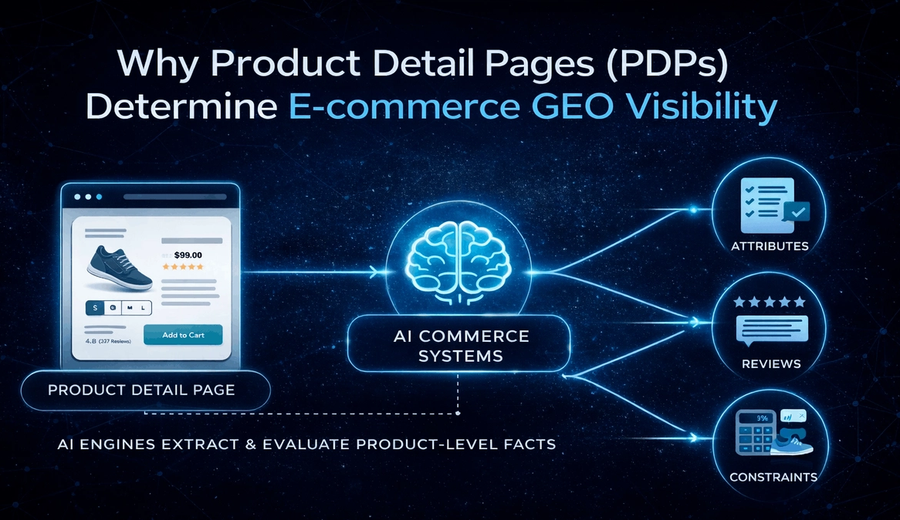
AI engines assemble recommendations from the sources they can retrieve and trust for a given shopping question. They look for clear product facts and use cases on your own site, structured data and feeds that confirm price, availability and variants, and independent validation from reviews, editorial buying guides, Reddit and other community discussion. Products that are described clearly and consistently across all of these sources are easier for AI to understand and safer for it to recommend.
Stellar's five-pillar framework assesses each of these signals and identifies where your products are falling short.
How is AEO different from SEO for e-commerce?
SEO focuses on ranking your pages in a list of search results. AEO focuses on whether AI engines and shopping agents mention, recommend and link to your products when they generate an answer. There is overlap, since crawlable pages, good content and authority help both. AEO puts more weight on explicit product facts, comparisons and use-case answers that AI can extract, on structured data and feeds, and on third-party sources such as reviews, editorials, YouTube and Reddit that AI often cites more than brand sites. AEO work generally supports SEO rather than competing with it.
Does ChatGPT Shopping or Google AI Mode use our product feed?
Yes. ChatGPT indexes structured product feeds that merchants share through OpenAI's merchant program, with Shopify and Etsy stores connected through platform integrations. As of summer 2026, most of ChatGPT's shopping recommendations now come from these feeds rather than from crawled web pages. Google AI Mode draws on Google's Shopping Graph, which is built from Merchant Center feeds and the product information brands and retailers publish across the web, including schema markup on product pages. A feed helps get your products considered, but it does not decide whether they are recommended. AI engines also weigh your product page content, reviews and third-party coverage, and inconsistencies between your feed, structured data and site can count against you.
Stellar reviews your feeds alongside your site and off-site footprint so they all tell the same story.
Does Reddit impact if our brand or products get recommended by AI answers?
Yes. Reddit is one of the most frequently cited sources in AI answers to product and "best of" questions, because AI engines treat community discussion as independent evidence of how products perform. If your brand is absent from relevant threads, or discussed with negative or outdated sentiment, that can shape how AI describes and ranks your products.
A Reddit strategy is part of Stellar's Authority Signals work: we identify the subreddits and threads AI is citing in your category, assess how your brand shows up, and build a plan for authentic participation and earning positive mentions.
How do AI shopping agents choose where to buy?
With agentic commerce, AI agents like Muse compare options and can complete purchases on a shopper's behalf. To do that, they utilize your product feeds and PDPs. They need reliable product data to be confident in making a transaction: accurate pricing, availability, variants, shipping and return terms, and consistent information across your site and the retailers that carry your products. When titles, attributes or prices differ across Amazon, retail partners and your own store, agents may choose a competitor or another seller.
Stellar audits consistency across your channels and helps you make your product data clear and machine-readable wherever agents look.
Does Shopify handle AEO for me?
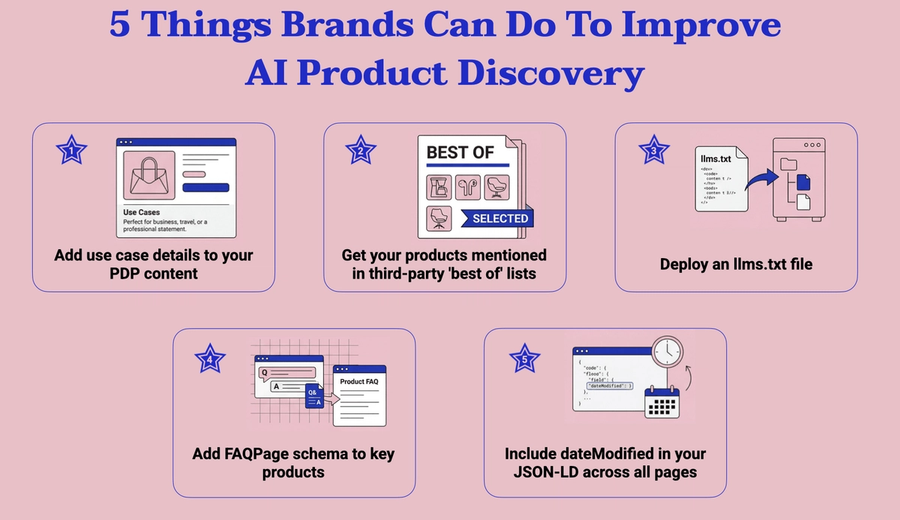
Partially. Shopify provides useful foundations, including basic product schema, sitemaps, default AI discovery files, and integrations with platforms like OpenAI. But assets like llms.txt are the same for every Shopify store, and if all stores have the same basic schema fields, it's not a differentiator. What Shopify provides does not explain what makes your products different, answer your shoppers' specific questions, fill gaps in your structured data, or address how your brand appears in reviews, editorials, YouTube, Reddit and retailer listings. While Shopify provides the technical foundations for AEO, brands still need to do the work to build their content and trust over those foundations.
How long does it take for AI visibility improvements to show up after we make changes?
It depends on the type of change and the AI engine. On-site improvements such as clearer product content, structured data and crawlability fixes can begin showing up in answers from engines that retrieve live web content within a few days to weeks of being recrawled. Off-site changes, such as new reviews, editorial coverage and Reddit mentions, typically take longer to implement, but once done, they can also start showing up within a few days to weeks in certain types of answers. But for AI engines' internal ranking of your brand to update, these third-party changes have to accumulate and be reflected, which often takes a few months.
Stellar re-runs your benchmark at regular intervals so you can see which changes are moving visibility, citations and sentiment.