FAQs
Publisher AEO questions we get asked
Why is AI search a bigger challenge for publishers than for other industries?
For most brands, AI answers are a new place to be recommended. For publishers, they are also a substitute for the visit itself: AI engines summarize the reporting, reviews, guides and explainers publishers create, often without a click. That puts referral traffic, and the advertising, affiliate and subscription revenue built on it, under direct pressure. And when many outlets cover the same story or topic, AI treats them as interchangeable, so only original reporting, analysis and expertise reliably earn a citation. At the same time, readers who do click through from AI answers tend to be highly engaged, so being the source AI cites and links matters more than ever.
AEO can’t bring back every click that AI answers absorb, but it determines whether your work is credited when AI uses it, and whether you are the outlet those readers find. Stellar helps publishers measure how often they are cited, credited and linked, and focus on the content and signals that win those citations.
How do AI engines decide which publishers to cite?
AI engines retrieve a handful of sources for each question and cite the ones that answer it most clearly and credibly. They favor content that states its key facts and conclusions explicitly, comes from authors and outlets they recognize as authorities on the topic, is accessible to their crawlers, and is current. When several sites cover the same story or topic, the clearest and most trusted version tends to be cited, which is not always the original. When people ask which publications, newsletters or writers to follow, AI also leans heavily on Reddit, directories and “best of” lists.
Stellar’s five-pillar framework assesses each of these signals across your templates and content types.
Should publishers block AI crawlers?
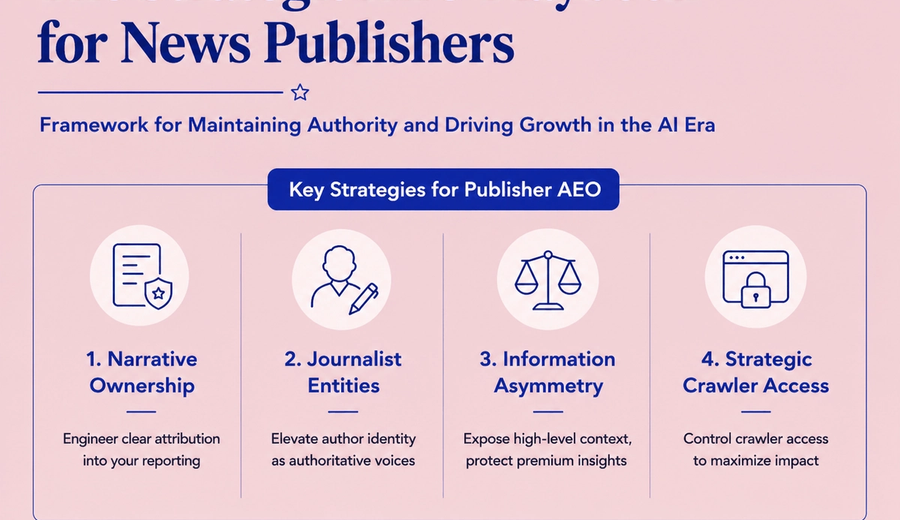
It depends on your business model and licensing position, and it is rarely a simple yes or no. Some AI crawlers, such as GPTBot and ClaudeBot, collect content to train models, while others, such as OAI-SearchBot and Claude-SearchBot, retrieve pages in real time to answer questions and can send readers back to you. Many publishers treat them differently, and some open a selected subset of content while protecting the rest. Blocking everything can remove you from AI answers entirely, while aggregators and competitors that retell your stories are cited instead.
Stellar helps you weigh these trade-offs to formulate a licensing strategy, audit how each AI crawler sees your site today, and set access rules that match the strategy.
Do publishers have to change how they write to optimize for AI?
Partly, depending on the content. Narrative and reported stories shouldn’t be rewritten into bullet points, which would hurt the reading experience and your brand. For those, most AEO work happens where readers don’t see it, such as crawlable summaries, structured data and author and topic pages, plus habits like stating the main finding clearly near the top. For service content such as guides, how-tos, reviews and comparisons, the formats AI favors, like step-by-step lists, comparison tables and FAQs, often serve readers better too.
Your content strategy and what you write about should also be reviewed as part of your AEO strategy. AI can already summarize generic, widely covered information, but it can’t produce first-hand testing, real experience, original reporting or expert opinion. Publishers that prioritize that kind of content give AI a reason to cite them.
Does AEO work for paywalled and subscription content?
Yes. AI engines can only cite what they can access, so the goal is to decide deliberately what they see. Many publishers expose a crawlable summary of what each piece covers, the people and companies involved and why it matters, while keeping the full analysis for subscribers, and open selected foundational pieces in full so AI absorbs their perspective. Readers who arrive from AI answers tend to be high-intent, which makes them valuable subscription prospects.
Do licensing deals with AI companies replace the need for AEO for publishers?
No. Licensing agreements can give AI companies access to your content and provide revenue, but they do not guarantee that your content is cited, credited or linked in a given answer. Citation still depends on clarity, authority, accessibility and recency. AEO helps you get the most visibility from the access you grant, whether or not you have a licensing deal.
How do publishers measure AEO success?
Beyond search traffic, publishers should track how often their content is cited and linked in AI answers on their key topics, how often their brand and journalists are named, how accurately their work is represented, and the volume and conversion of referral traffic from AI platforms. Much of that traffic is unattributed, since Google doesn’t separate AI Overviews and AI Mode clicks from organic search and many AI-driven visits arrive as direct traffic, so analytics understate AI’s real impact.
Stellar sets up a benchmark across these measures and re-runs it at regular intervals, so you can see which changes are moving citations and readers.